Page 1 of 1
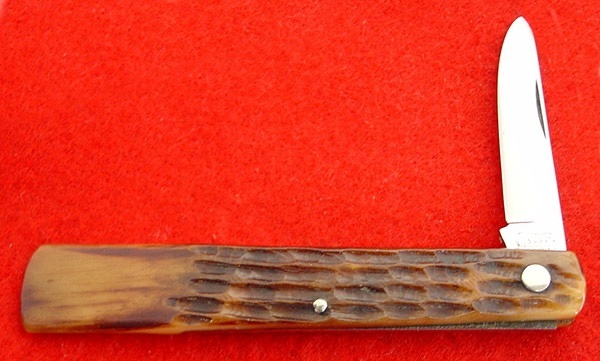
Questionable Early Case Budding Knife
Posted: Thu Jul 23, 2026 3:08 am
by prairiedog
Not believed to be authentic…but curious if anyone else has ran into this configuration. Wondering if this is a Frankenstein parts knife that an individual has pieced together…or if this was a little more widely produced fake being presented as an original Early Case horticulture knife.
Appreciate any feedback!
Kind regards, Perry
Re: Questionable Early Case Budding Knife
Posted: Thu Jul 23, 2026 3:18 am
by Mumbleypeg
It’s real.
Ken
Edit: see below for correction and further info.
Re: Questionable Early Case Budding Knife
Posted: Thu Jul 23, 2026 3:57 am
by prairiedog
Mumbleypeg wrote: ↑Thu Jul 23, 2026 3:18 am
It’s real.
Ken
Ken,

I really appreciate you taking the time to respond.
That’s encouraging to hear. Would you mind sharing what leads you to believe it’s authentic? I’m not questioning your judgment—this configuration in Case is simply different from anything I’ve personally encountered, so I’d genuinely like to learn the positives you’re seeing. And would this have a pattern number assigned to it by Case?
Thanks again,
Perry
Re: Questionable Early Case Budding Knife
Posted: Thu Jul 23, 2026 4:27 am
by Mumbleypeg
Sorry. I may have endorsed it too soon. Just noticed the TESTED XX stamp which to my knowledge was not used on W.R. CASE & SONS knives. They didn't get ownership of the TESTED XX trademark until the Case Bradford era.
What is the closed length of the knife? Case made several different budding/grafting knives. Some were bone handled, there was a gunstock shaped pattern also. Both had the tapered budding tool like the one you have. But other cutleries made them also.
You can find examples by doing a search here for "budding" or "grafting".
Ken
Re: Questionable Early Case Budding Knife
Posted: Thu Jul 23, 2026 4:35 am
by prairiedog
Mumbleypeg wrote: ↑Thu Jul 23, 2026 4:27 am
Sorry. I may have endorsed it too soon. Just noticed the TESTED XX stamp which to my knowledge was not used on W.R. CASE & SONS knives. They didn't get ownership of the TESTED XX trademark until the Case Bradford era.
What is the closed length of the knife? Case made several different budding/grafting knives. Some were bone handled, there was a gunstock shaped pattern also. Both had the tapered budding tool like the one you have. But other cutleries made them also.
You can find examples by doing a search here for "budding" or "grafting".
Ken
It’s 4 1/2” closed
Re: Questionable Early Case Budding Knife
Posted: Thu Jul 23, 2026 5:11 am
by Mumbleypeg
Case made several different versions of of budding knives over the years. All those I have seen had spey blades. There were at least two versions. One was all bone, with one end tapered to a spatula-like end (opposite the blade) and no bolster. The bone handle is cut from a single piece of bone. It’s 4 inches closed length.
- IMG_8554.jpeg (83.12 KiB) Viewed 149 times
The other version is a gunstock shape, also having a spatula on the end opposite the blade. It has a bolster. The interesting thing about this one is the spatula protrusion and the spring are a single piece of metal. They were made with bone and synthetic handle covers. The pattern is 6109, it’s 3-1/4 inches.
Those are the versions I’ve seen. Yours confused me - it appears to have the tapered bone “spatula” with a bolster, sort of a hybrid between the Case versions.
Case also made a few other single-blade budding knives with spey blades but they did not have the tapered spatula end. Sorry about the curveball. My bad. The clip master blade should have told me it’s not a Case, before I ever looked at the stamps.

Ken
Re: Questionable Early Case Budding Knife
Posted: Thu Jul 23, 2026 11:54 am
by prairiedog
Mumbleypeg wrote: ↑Thu Jul 23, 2026 5:11 am
Case made several different versions of of budding knives over the years. All those I have seen had spey blades. There were at least two versions. One was all bone, with one end tapered to a spatula-like end (opposite the blade) and no bolster. The bone handle is cut from a single piece of bone. It’s 4 inches closed length.
IMG_8554.jpeg
The other version is a gunstock shape, also having a spatula on the end opposite the blade. It has a bolster. The interesting thing about this one is the spatula protrusion and the spring are a single piece of metal. They were made with bone and synthetic handle covers. The pattern is 6109, it’s 3-1/4 inches.
Those are the versions I’ve seen. Yours confused me - it appears to have the tapered bone “spatula” with a bolster, sort of a hybrid between the Case versions.
Case also made a few other single-blade budding knives with spey blades but they did not have the tapered spatula end. Sorry about the curveball. My bad. The clip master blade should have told me it’s not a Case, before I ever looked at the stamps.
Ken
Ken, thank you for taking another look and for the detailed explanation. I appreciate you sharing your knowledge, insight and comparison photos. Hopefully this post will shed light on some red flags collectors should be looking for.
Thanks again!
Kind regards, Perry
 I really appreciate you taking the time to respond.