I even added some handy dandy file work....

Removed the original handles finish and added linseed oil.
Gave me something to do while I take my late morning cigar....






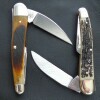






I like the wharncliffe blade best!TripleF wrote:I didn't like the tip.......
So I made a change.
The machetes I use at work are about as thin as a kitchen knife. As long as it is strong enough, the thinner the better. I not infrequently chop down 6" or larger trees with a 24" machete. It is not made for that kind of chopping, but it will do the job.orvet wrote:Nice modification Scott, though being a Wharncliffe lover I like the first version best.
Never sell a good kitchen knife short! When I managed a cutlery store I had two or three Christmas tree growers who brought me their Christmas tree trimming knives to be sharpened.
The knives they used? … … 12" & 14" Wusthof Trident slicing knives. They are thin steel and holds an edge very well. The Christmas tree trimmer just uses the knife to shape the new growth and keep it from going too far in one direction.
You wouldn't think that a fairly thin kitchen knife would be used to shape trees, but they are because the edge dynamics and the excellent steel make it the perfect tool for the job!
You are absolutely correct!Dinadan wrote: I have thought more once that the thick blades of modern hunting knives have a lot more to do with marketing than with utility. I like the look of the thick blades, and if I were trying to stab through the ribs of an attacking bear or split kindling the added strength could be useful. But for skinning and slicing I think the thin blades work best.
You are absolutely correct!Dinadan wrote: I have thought more once that the thick blades of modern hunting knives have a lot more to do with marketing than with utility. I like the look of the thick blades, and if I were trying to stab through the ribs of an attacking bear or split kindling the added strength could be useful. But for skinning and slicing I think the thin blades work best.