


A liner locking friction folder!
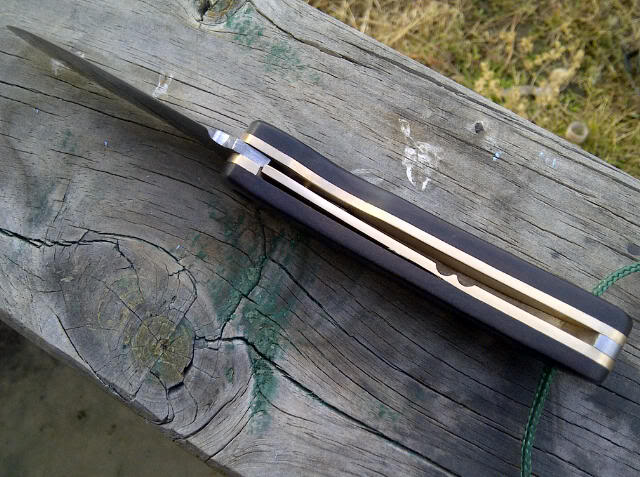
It was commissioned by a client who works as a Ranger in one of the UK's National Parks. He was looking for a real working knife, capable of all and any reasonable heavy duty knife task he could throw at it and he wanted it safe. Now, with the UK carry laws he was leaning towards a Friction Folder, but seeing as the 90mm cutting edge was longer than UK Legal EDC in any case, and seeing as he could justify carrying the knife due to his occupation, I suggested we do a liner lock as well.
Why the combination?
Well:
1. The extended tang makes for very easy one handed opening, especially in cold conditions when wearing gloves.
2. The locks complement each other and alternate as primary and secondary safeties, making for a really safe knife
3. Even in the hugely unlikely event of one of the locks failing, you still have a working knife
4. The client has had bad experiences with ball indent liner locks and does not like the ball indent system. The adjustable pivot screw on the friction folder allows for tension to be set such that the blade is additionally secure in the closed position.
For those who may wonder about the use of brass for the liner lock, remember the following:
1. Several makers, including GEC, Camillus/Camco, Klein, Imperial, etc have been using brass for liner locks with great success - some for almost 100 years. I have a couple of TL 29's you can see were ridden hard and put away wet for over 60 years and the locks still work perfectly
2. In 90+% of cases the extended tang of the friction folder takes the pressure off the liner lock, reducing what wear there might be substantially
3. What wear can/might take place will take place to the point where the lock might move through to touch the opposite liner - but you would still have a 3mm wide lock behind a 4mm blade - in other words, it is not going anywhere! And it is still combined with the extended tang lock of the Friction Folder.
Specs:
Blade: 4mm O1 tool steel, full height convex flattening out a little towards the cutting edge, finished to 400 grit satin, as it is a working knife that will show scratches easily on smooth finishes
Pivot: 4.5mm stainless, adjustable and locks with internal grub screw
Liners: 3mm Brass
Pins: 3.2mm Brass
Spacer: 4mm O1
Scales: African Black Chacate
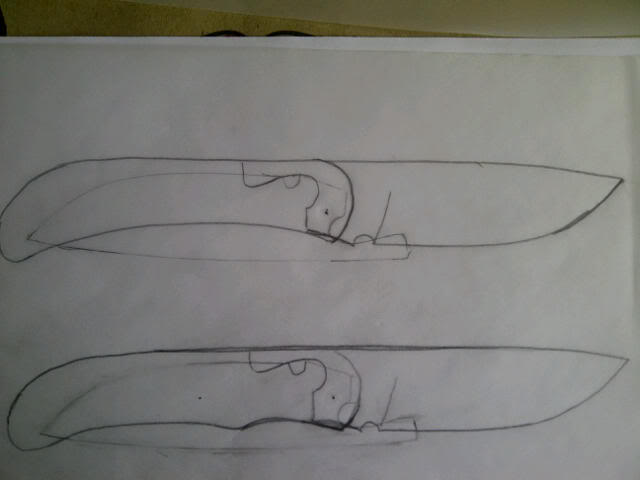
After some designing, the client chose to top one of the two desings:
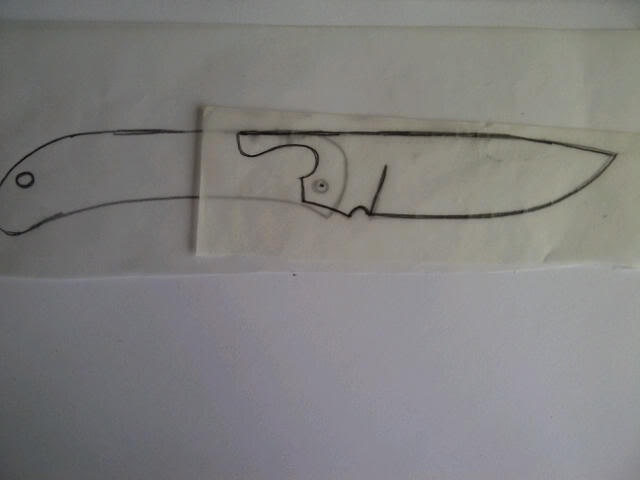
Copied onto tracing paper to see if the blade movement looks OK

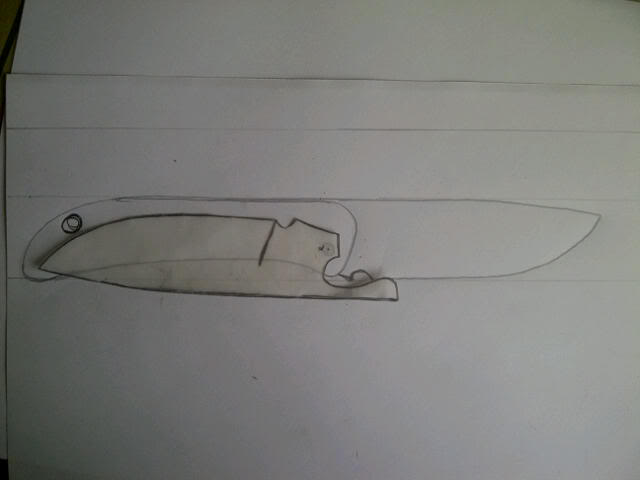
Onto a cardboard copy to get a better idea of how it functions
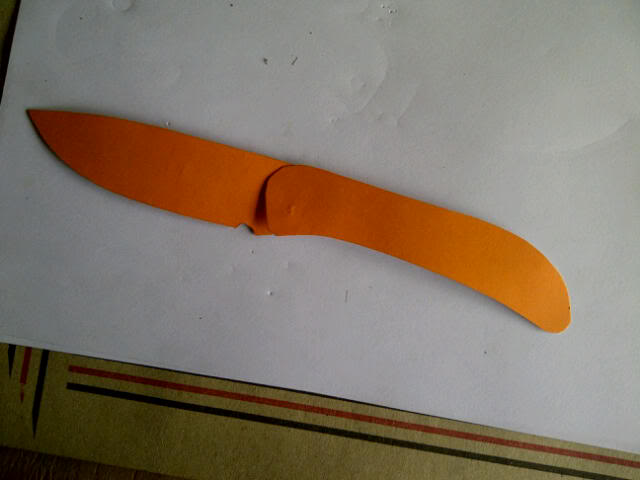
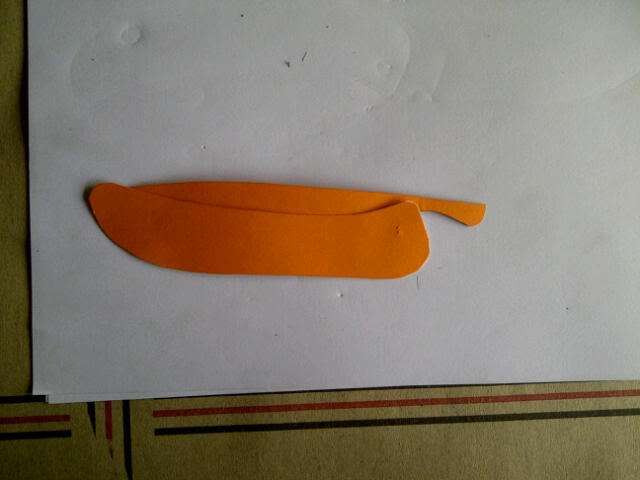
Templates:

Parts cut, profiled and roughly fitted:
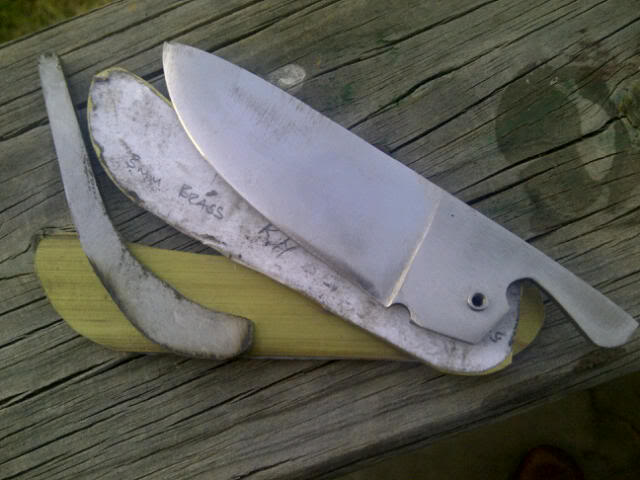

Notice how the angle at the back of the tang would stop the blade from pushing past the liner in the hugely unlikely event of the stop pin failing:
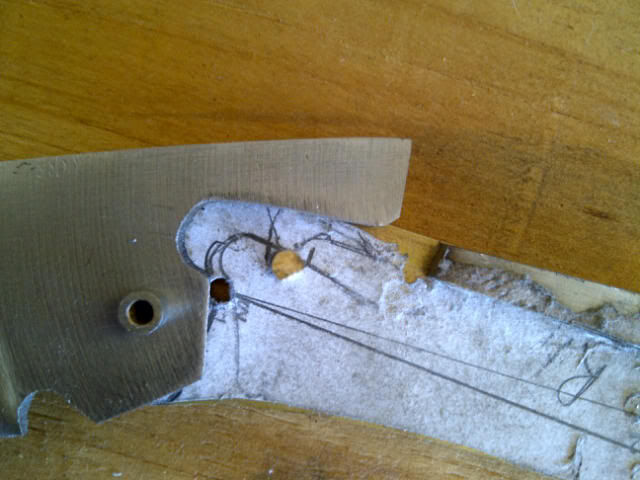
Cutting the liner lock

Initial result:
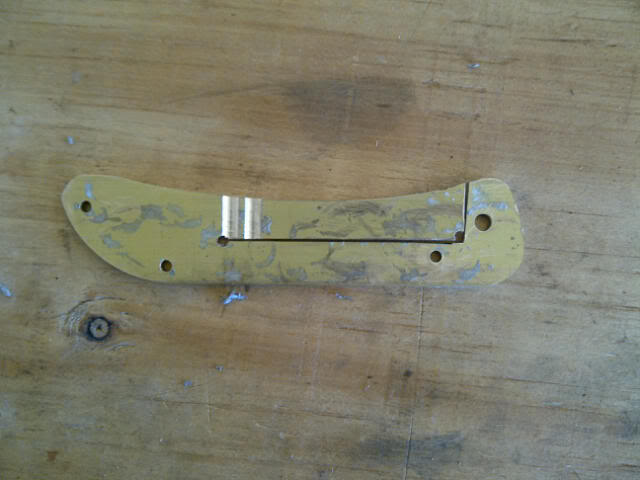
Starting to come together
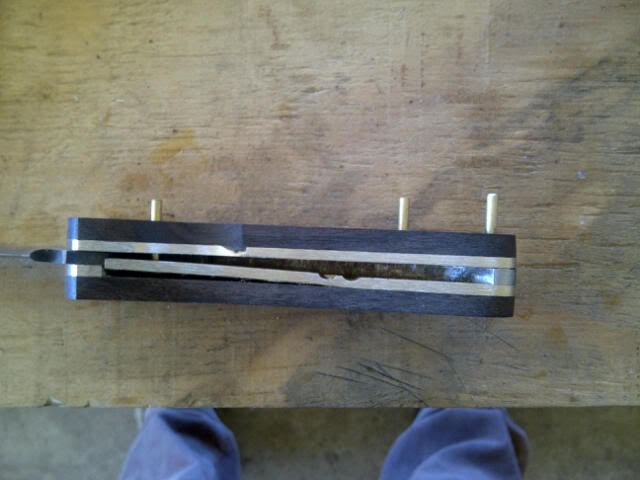
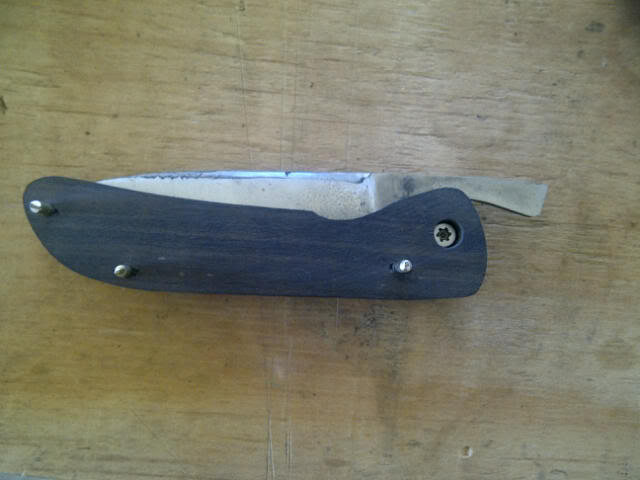

Final result
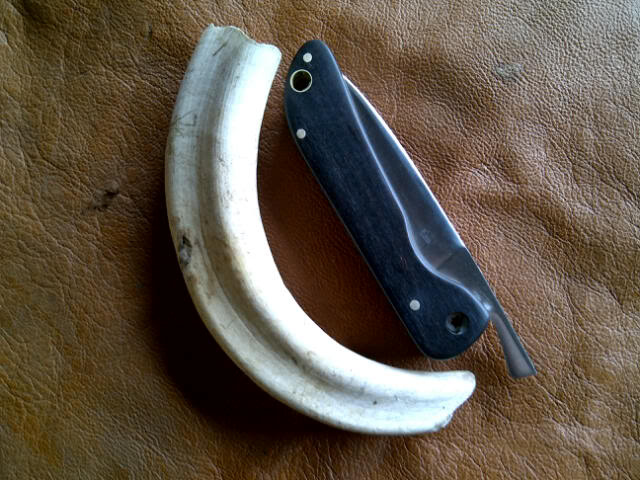
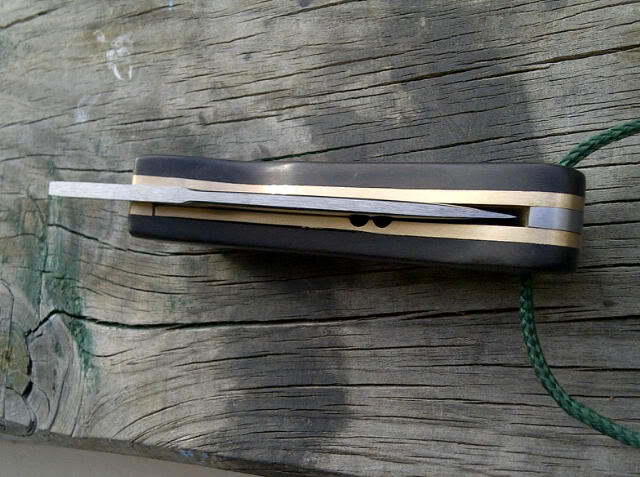

Thank you for looking and comments welcome - as always!